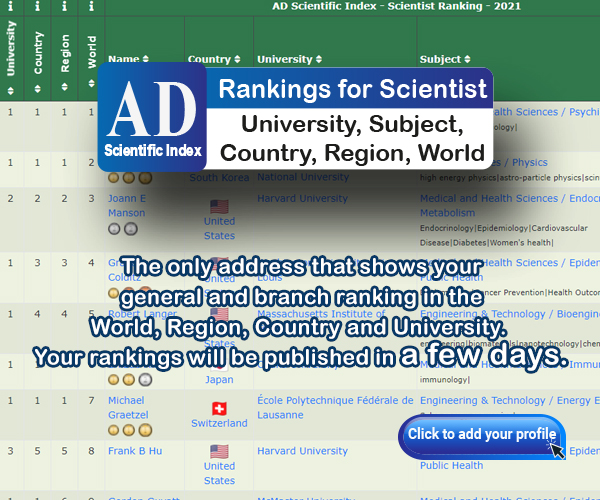




The AD Scientific Index 2026 (www.adscientificindex.com) offers one of the most detailed portraits of research and scientific performance worldwide. With coverage of over 2.6 million scientists and 24,550 institutions, the Index gives us a clear window into the United Kingdom’s academic ecosystem, which continues to thrive as one of the world’s leading centers of higher education and research.
Oxford and Cambridge: The Everlasting Icons
At the top, the University of Oxford remains a global giant, ranking #1 in the UK and #5 worldwide. Its rival, the University of Cambridge, follows closely as #4 in the UK and #39 globally, continuing the centuries-old Oxbridge tradition of shaping science, philosophy, and society.
London as a Global Research Hub
London dominates the rankings with multiple institutions in the top tier. University College London (UCL), Imperial College London, King’s College London, and the London School of Economics and Political Science (LSE) all hold leading positions. The London School of Hygiene & Tropical Medicine (LSHTM) also demonstrates its world-class role in public health and epidemiology, particularly relevant in today’s global health landscape.
The Power of the Russell Group
Beyond Oxbridge and London, the Russell Group universities make an extraordinary impact. University of Manchester, University of Edinburgh, University of Birmingham, University of Bristol, University of Warwick, University of Glasgow, University of Southampton, University of Leeds, University of Nottingham, University of Sheffield, Durham University, University of Liverpool, and Cardiff University all appear prominently in the Index.
Together, these institutions represent the backbone of UK research, contributing not only to publications and citations but also to technological advances, social policy, and cultural development.
Regional Excellence: From York to Exeter
The strength of the UK’s academic scene extends well beyond the traditional giants. Universities such as University of York, University of Exeter, University of Leicester, University of Surrey, University of Sussex, and University of Kent all demonstrate strong representation in the AD Scientific Index.
Smaller but highly specialized institutions—such as Cranfield University, Heriot-Watt University, and Queen’s University Belfast—add further richness to the UK’s research profile, particularly in areas like engineering, energy, and social sciences.
A National Ecosystem of Knowledge
The UK’s 322 universities and institutions, hosting nearly 100,000 scientists, highlight a system where excellence is widely distributed. While Oxbridge and London attract global attention, the AD Scientific Index makes it clear that academic talent flourishes nationwide. Whether it is St Andrews in Scotland, Aberystwyth in Wales, or Ulster University in Northern Ireland, every region of the UK is contributing to global scientific dialogue.
Why These Rankings Matter
The AD Scientific Index 2026 is not just about prestige; it is about transparency and diversity. By evaluating universities on multiple indicators—H-index, i10-index, and citation counts—the Index recognizes both lifetime contributions and recent research momentum. This ensures a balanced view, rewarding both established giants and rising institutions.
Conclusion: A Collective Impact
The story of UK academia is not defined by a handful of elite institutions but by a collective network of universities pushing the frontiers of science and knowledge. From Oxford to Exeter, from Edinburgh to Cardiff, the United Kingdom continues to stand as a pillar of global higher education.
As challenges like climate change, global health crises, and digital transformation reshape our world, the UK’s universities—mapped so clearly by the **AD Scientific Index (www.adscientificindex.com)**—will remain essential to creating solutions with both academic and social impact.
👉 Suggested hashtags:
#ADScientificIndex2026 #UKUniversities #RussellGroup #AcademicExcellence #GlobalResearch #HigherEducation